The Only True Protest Is Beauty
RINGO Visits Opening of Fondazione Dries Van Noten in Venice
There are exhibitions that explain themselves.
There are exhibitions that entertain themselves.
There are exhibitions that perform themselves.
And then there are exhibitions that breathe and echo before introducing themselves.
Dries Van Noten for sure masters the language of both art and curation, but he manages to surpass the definition of an art exhibition, at Fondazione Dries Van Noten he has cooked a heavenly feast for anyone who steps inside the Palazzo Pisani Moretta.
Ringo has the greatest honor to be invited for the press opening of the temporary opening exhibition named as The Only True Protest Is Beauty.
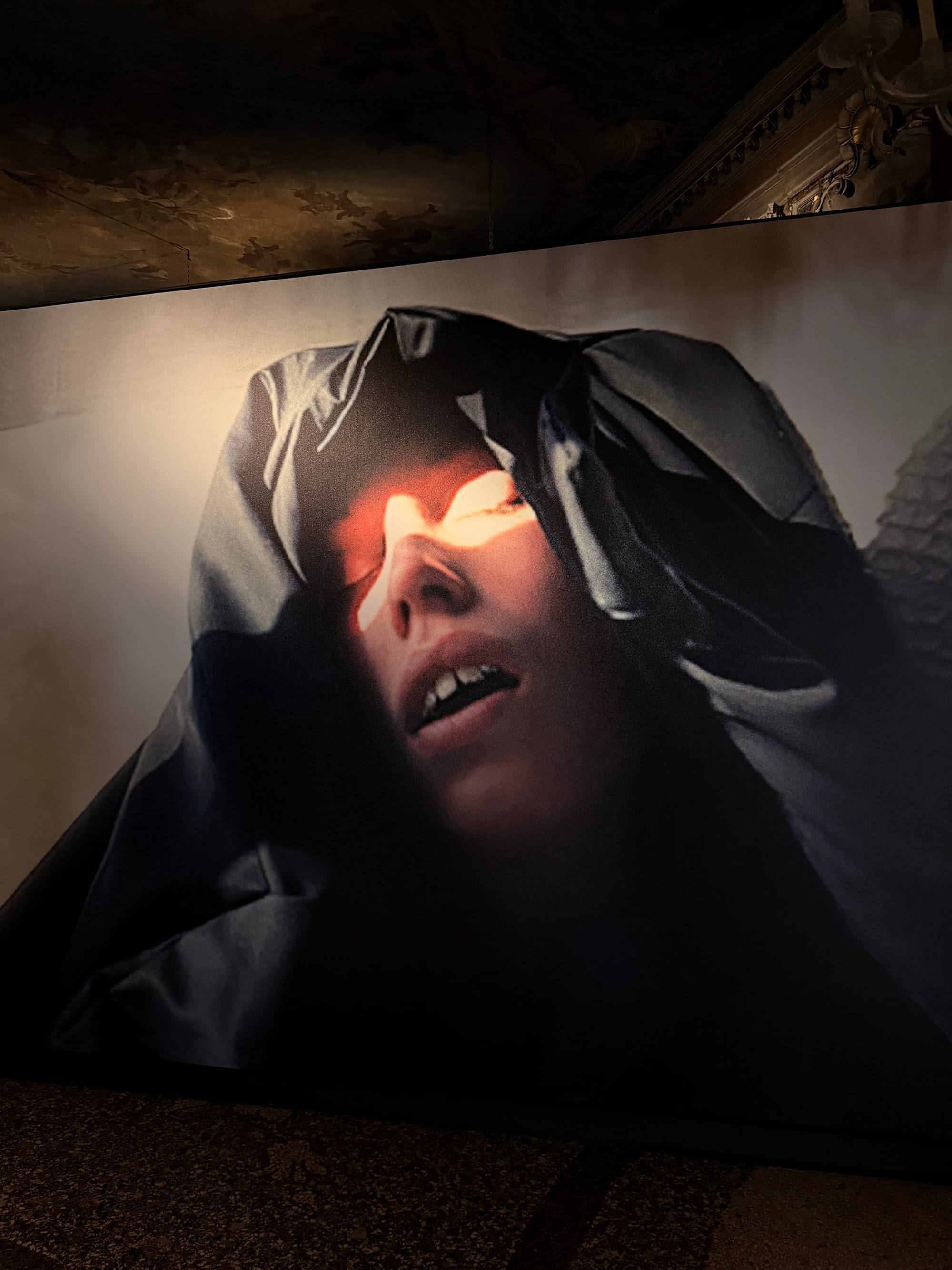
The palazzo — Gothic, ornate, wounded by time and restored by devotion — becomes less a venue than a body. A body with frescoed ceilings, Murano chandeliers, mirrored rooms, dark corridors, and surfaces that remember more than they reveal.
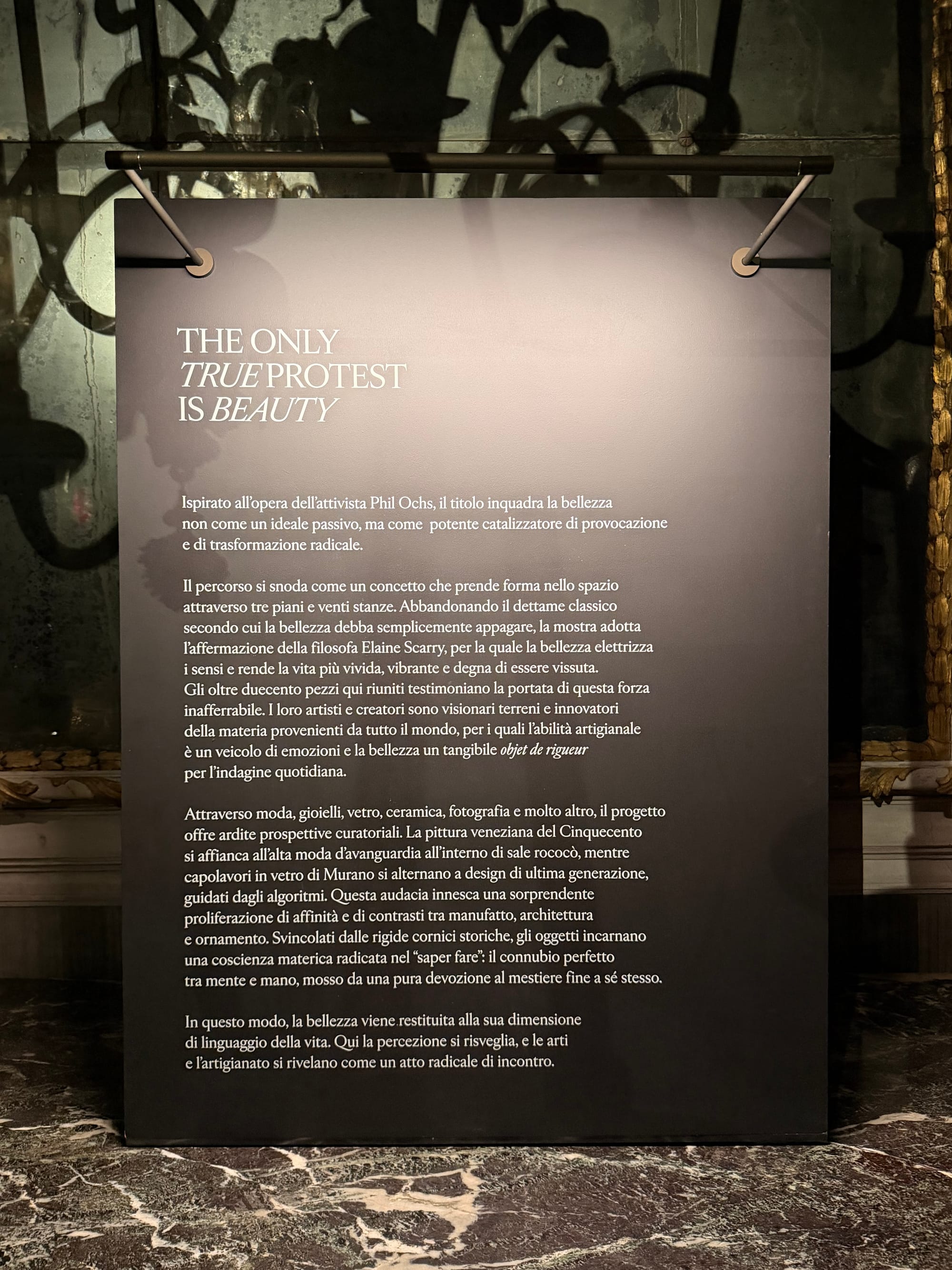
Curated by Dries Van Noten and his lifetime friend Geert Bruloot (one of the key persons for the success of Antwerp Six), the exhibition runs from 25 April to 4 October 2026 and takes its title from a line associated with activist musician Phil Ochs. The foundation frames beauty not as comfort, but as a force capable of intensity, provocation, and transformation.
For Ringo, the visit was not only about seeing beautiful things (fashion, design, art, the holy trinity). It was also about understanding why beauty still matters when the world has become so efficient at making us forget how to look deeper with information fraction all over the corners.
Foundation as an Incubating Shrine
Dries Van Noten’s new foundation arrives after his departure from the fashion house that carried his name. But this is not a mausoleum for legacy. It does not behave like a retrospective. It does not ask us to worship Dries as a finished figure.
Instead, it opens a door, a door for presenting new creatives, a door for introducing new aesthetics and systems.
Van Noten and his partner Patrick Vangheluwe acquired Palazzo Pisani Moretta, a vast historic palazzo on the Grand Canal, as the home of the foundation. Reports describe the space as a 15th-century Venetian Gothic building, later transformed through centuries of restoration, now becoming a site for craft, material intelligence, and cross-disciplinary dialogue.
This distinction is important. As a fashion design Dries created a palace for craftmanship around fabrics, here he is building a shrine to celebrate all sorts of craftmanship. And through the space, he is also incubating new talents in all practices.
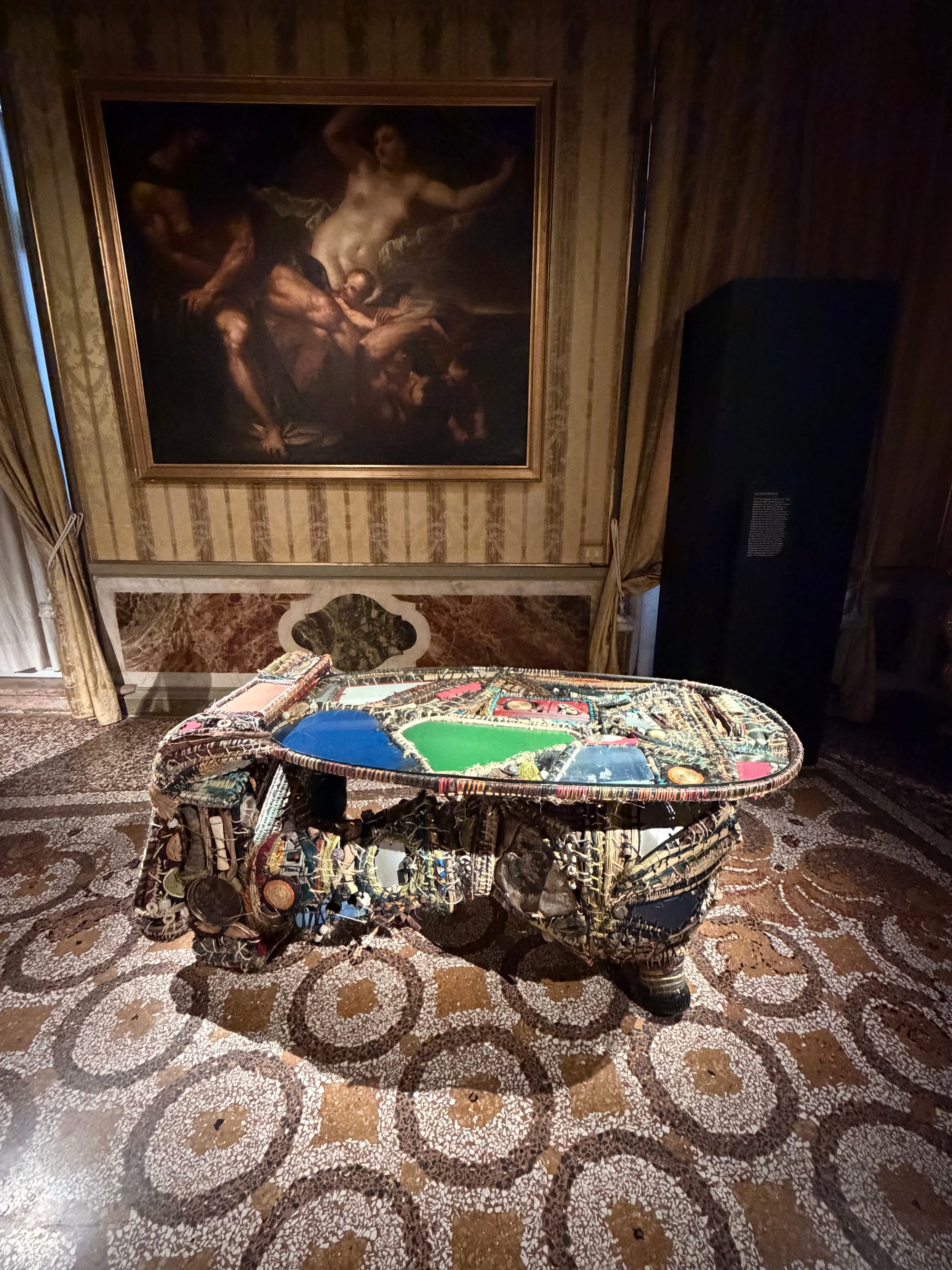
We witnessed more than 50 artists and makers, with over 200 works across fashion, art, design, jewellery, ceramics, glass, metalwork, furniture, and craft. It has been described as a kind of Wunderkammer, but this word alone feels too decorative. What happens here is stranger. Less cabinet of curiosities, more emotional architecture. Nothing was made by Dris himself, but everything speaks his codes.
Beauty Is Not Peaceful Here
The title could be misunderstood. The Only True Protest Is Beauty might sound gentle, almost decorative. But the exhibition refuses beauty as softness. It refuses prettiness. It refuses harmony as the final answer. Here, beauty is not resolution. It hides in confrontation and tensions.
The official presentation describes beauty as a charged encounter, something that unsettles the familiar and creates space for the unexpected. This is perhaps the clearest key to the exhibition: Beauty is not used to calm the viewer, but to disturb the viewer into attention. This is why the palazzo matters. A white cube would have made the works clean. Palazzo Pisani Moretta makes them haunted.
The rooms are already full before the exhibition begins. Full of history, ornament, wealth, decay, restoration, ghosts. The works do not erase this history. They collide with it. Sometimes they harmonize. Sometimes they resist. Sometimes they appear almost parasitic, growing out of the architecture like strange flowers. In this exhibition, beauty is not a surface. It is a wound with discipline.
Dries Van Noten’s Eye: Not Curating, But Listening
During the opening, Dries Van Noten reportedly emphasized that he does not wish to be defined simply as an art curator. That refusal feels central to the exhibition’s intelligence. Because what is happening here is not curating in the cold institutional sense. It is listening.
Van Noten’s eye has always been musical: a way of arranging colors, fabrics, prints, silhouettes, gestures, references, and contradictions until they begin to speak to one another. In fashion, this appeared as collections. In Venice, it becomes spatial.
The exhibition does not place works in hierarchy.
It places them in relation.
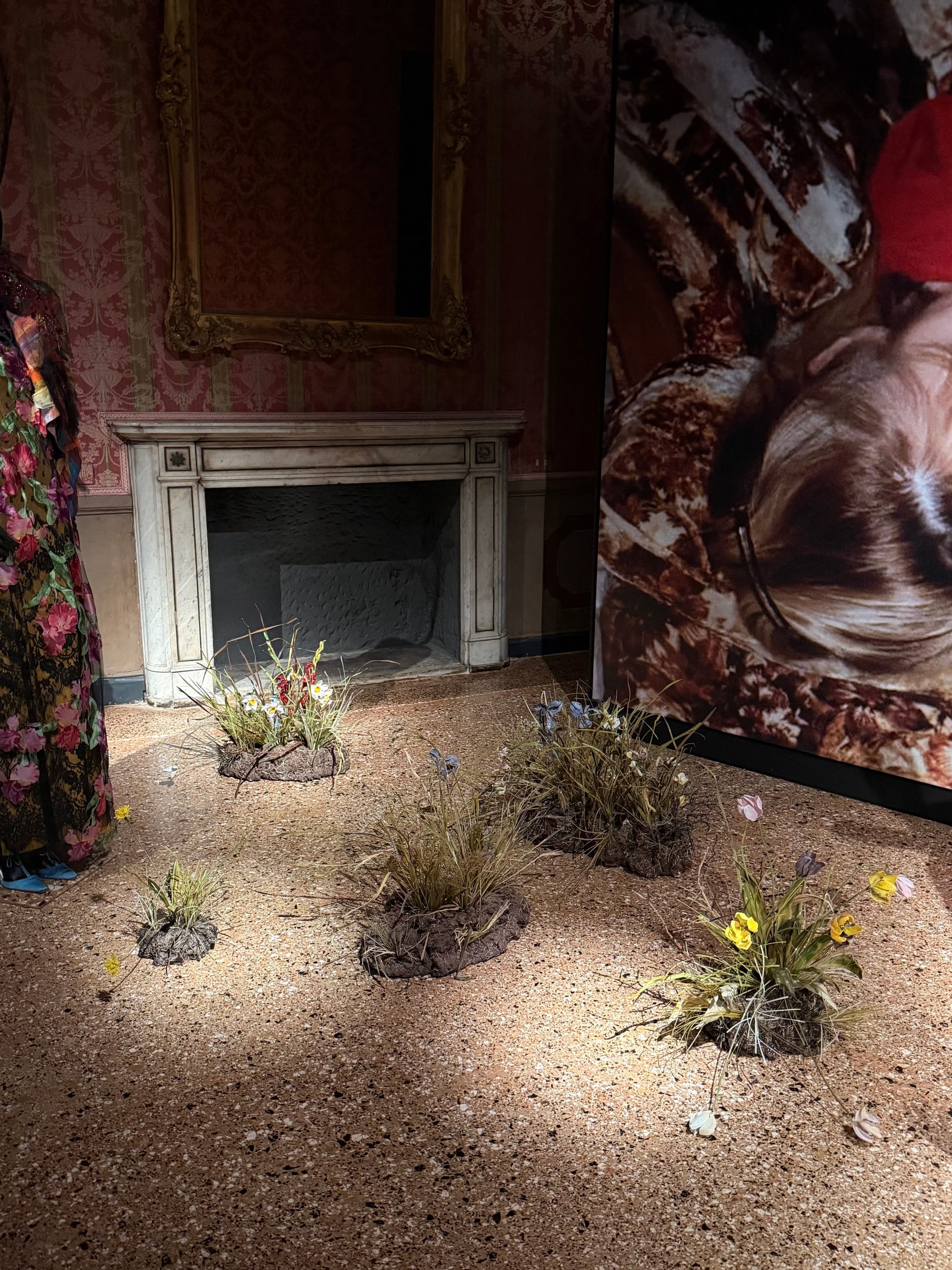
A garment beside a sculpture.
A chair beside a ghost.
A bouquet made of discarded objects beside the memory of ceremony.
A body made absent, then returned through craft.
The foundation’s own language speaks of craftsmanship engaging emotion and material inquiry, forming a constellation through mastery and productive contrast. That is exactly what the visitor feels: not a linear argument, but a constellation.
A constellation does not explain.
It connects.
The Palazzo as a Nervous System
Venice is never neutral.
The city is already a contradiction: sinking and glittering, exhausted and immortal, theatrical and deeply practical. The exhibition catalogue publisher Marsilio describes Venice as not an immobile museum, but a living organism where ideas circulate like tides and take shape through materials, gestures, and slow making.
This is why the exhibition belongs here.
In Venice, craft is not a style.
It is infrastructure.
Glass, metal, textile, stone, wood, ornament — these are not decorative categories, but systems of survival. The city itself is a handmade argument against disappearance.
At Palazzo Pisani Moretta, the exhibition seems to understand this. It does not arrive as a foreign object. It enters the bloodstream.
Some works appear like relics.
Some like mutations.
Some like visitors who have overstayed for centuries.
Ann Carrington: The Discarded Object Learns Ceremony Again
Ann Carrington brings another register: the poetry of discarded things.
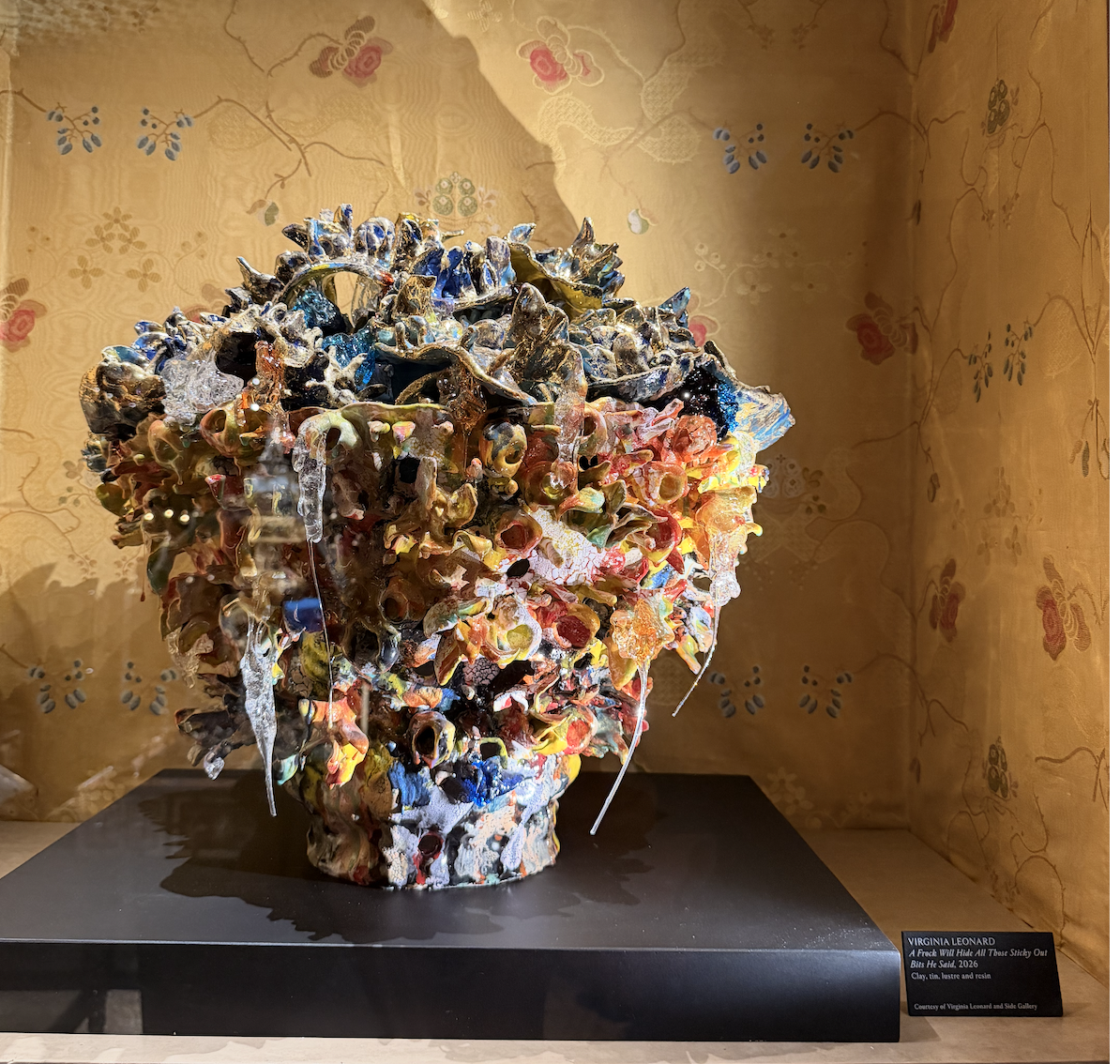
Her sculptures often gather found objects into bouquets, vases, busts, and ceremonial forms. What has been thrown away returns as ornament. What has been ordinary becomes almost royal. Reports on the exhibition highlight her sacred-heart-like works made from reused silverware, a perfect example of her ability to transform utility into devotion.
There is something deeply Dries in this gesture.
Not because it resembles his clothes literally, but because it shares a belief: that beauty is often not invented from nothing. It is found, rearranged, layered, intensified.
Carrington does not erase the previous life of materials.
She lets them remain visible.
The fork remembers the table.
The spoon remembers the mouth.
The metal remembers touch.
Then it becomes a flower.
Ayham Hassan: The Garment as Inheritance
The presence of Ayham Hassan, the Palestinian designer trained at Central Saint Martins, gives the exhibition one of its strongest emotional and political frequencies. Coverage of the exhibition identifies him among the younger talents included by Van Noten, and notes his work in relation to fashion, craft, and cultural memory.
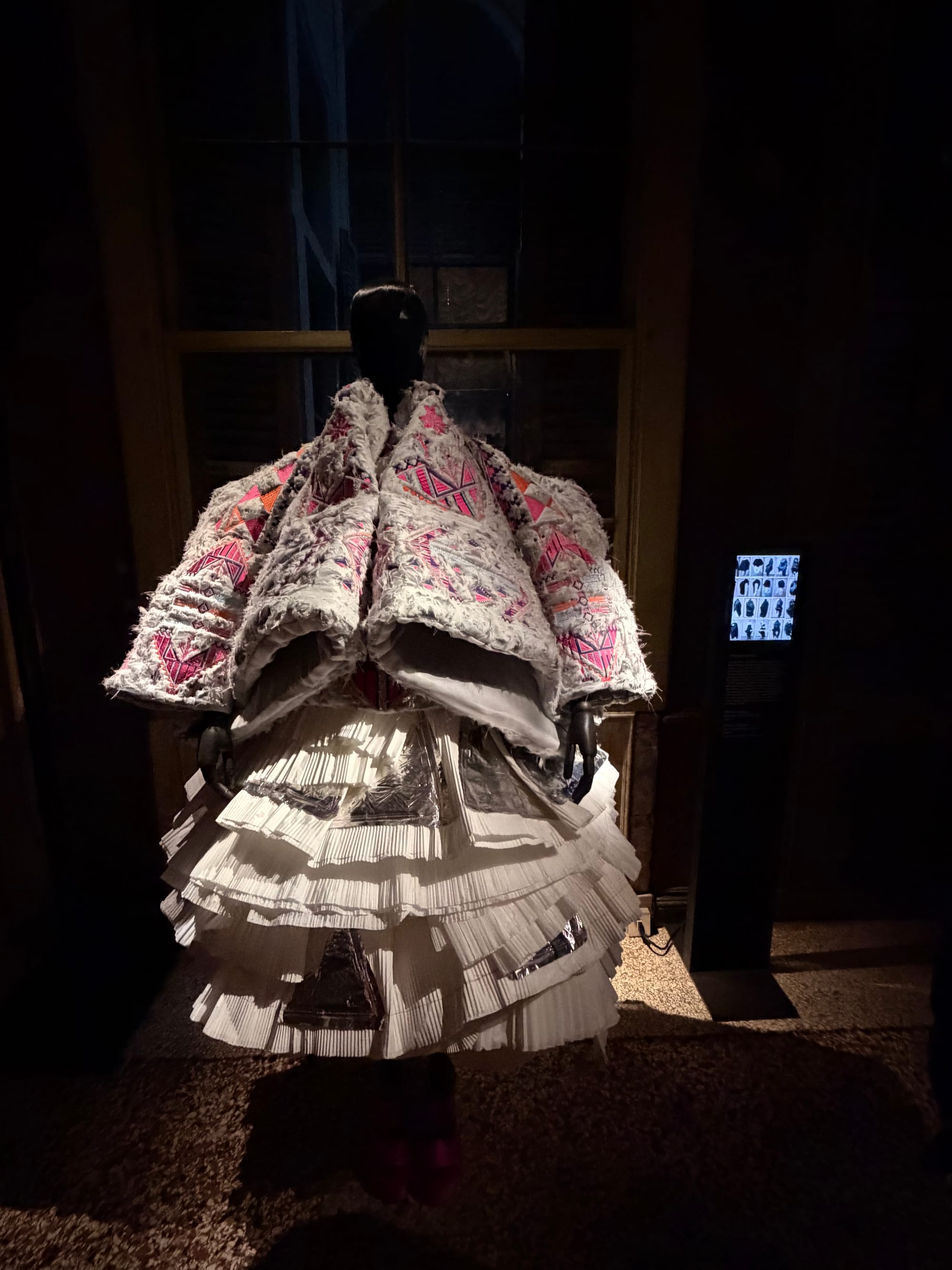
In the images Ringo captured, Hassan’s garment carries weight without heaviness. It is built through textile, tailoring, draping, and structure, but it does not become trapped in ethnographic display. It refuses to become only “heritage.” It is alive.
Tradition here is not a museum label.
It is pressure inside the fabric.
The garment seems to hold several times at once: ancestral time, political time, bodily time, fashion time. It is beautiful, but not simply because it is visually striking. It is beautiful because it understands that beauty can carry survival without announcing itself as slogan.
In Hassan’s work, the body is not only dressed.
It is protected.
It is remembered.
It is carried forward.
Richard Stipl: The Face After Language
Richard Stipl brings the exhibition into a darker psychology.
His polychrome wooden busts and distorted figures study identity through deformation. The faces are not idealized. They are marked, inscribed, wounded, theatrical. They feel less like portraits than states of mind. Placed in the darkened rooms of the palazzo, they become witnesses.
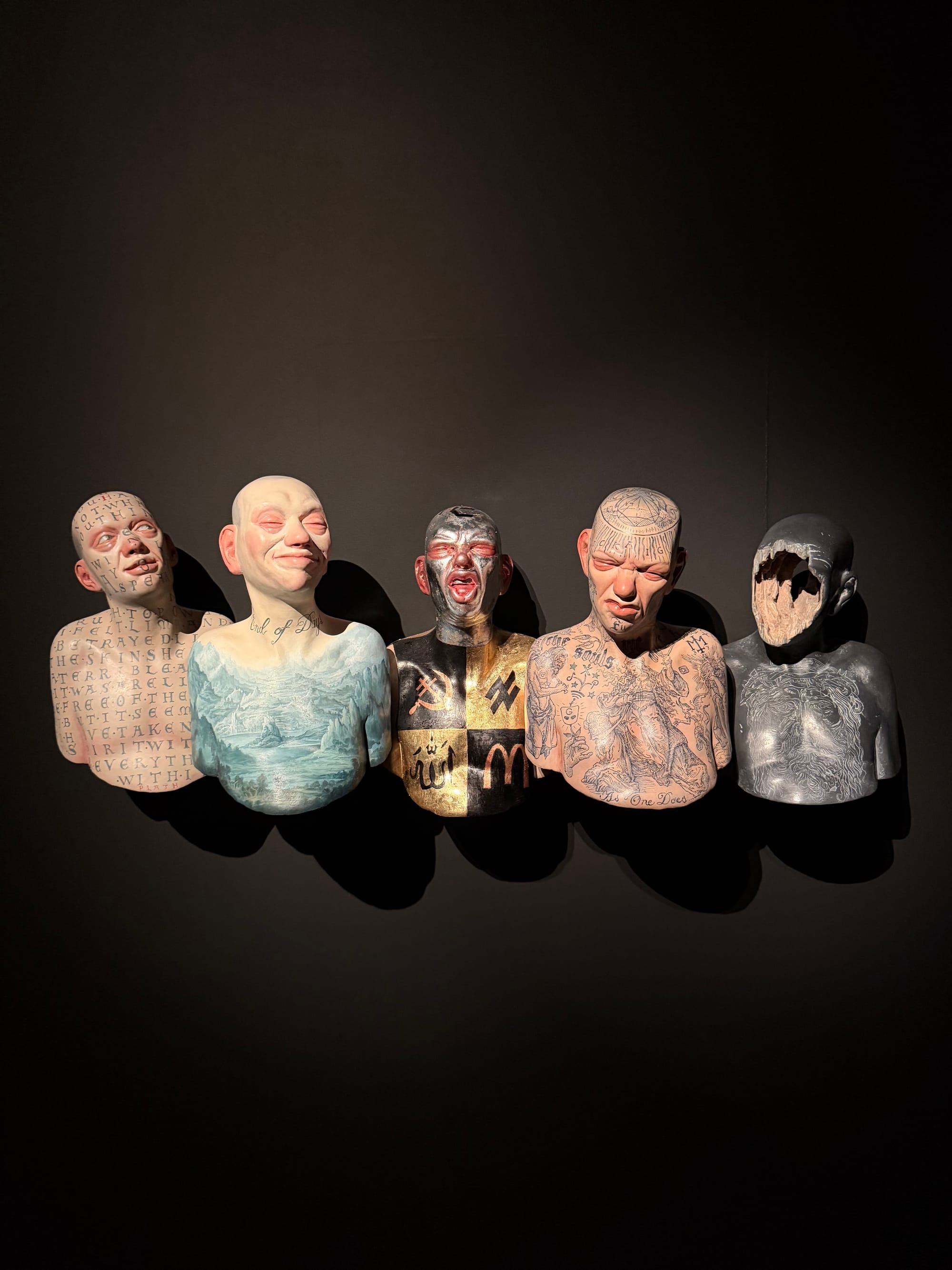
They do not seduce quickly.
They look back.
In a fashion context, beauty is often attached to surface: skin, fabric, image, silhouette. Stipl complicates this. His beauty arrives through discomfort. Through the refusal of smoothness. Through the human face when it can no longer perform coherence.
This is another kind of protest.
Not beauty as perfection.
Beauty as exposure.
Peter Buggenhout, Joseph Arzoumanov, Kaori Kurihara: Beauty at the Edge of the Monstrous
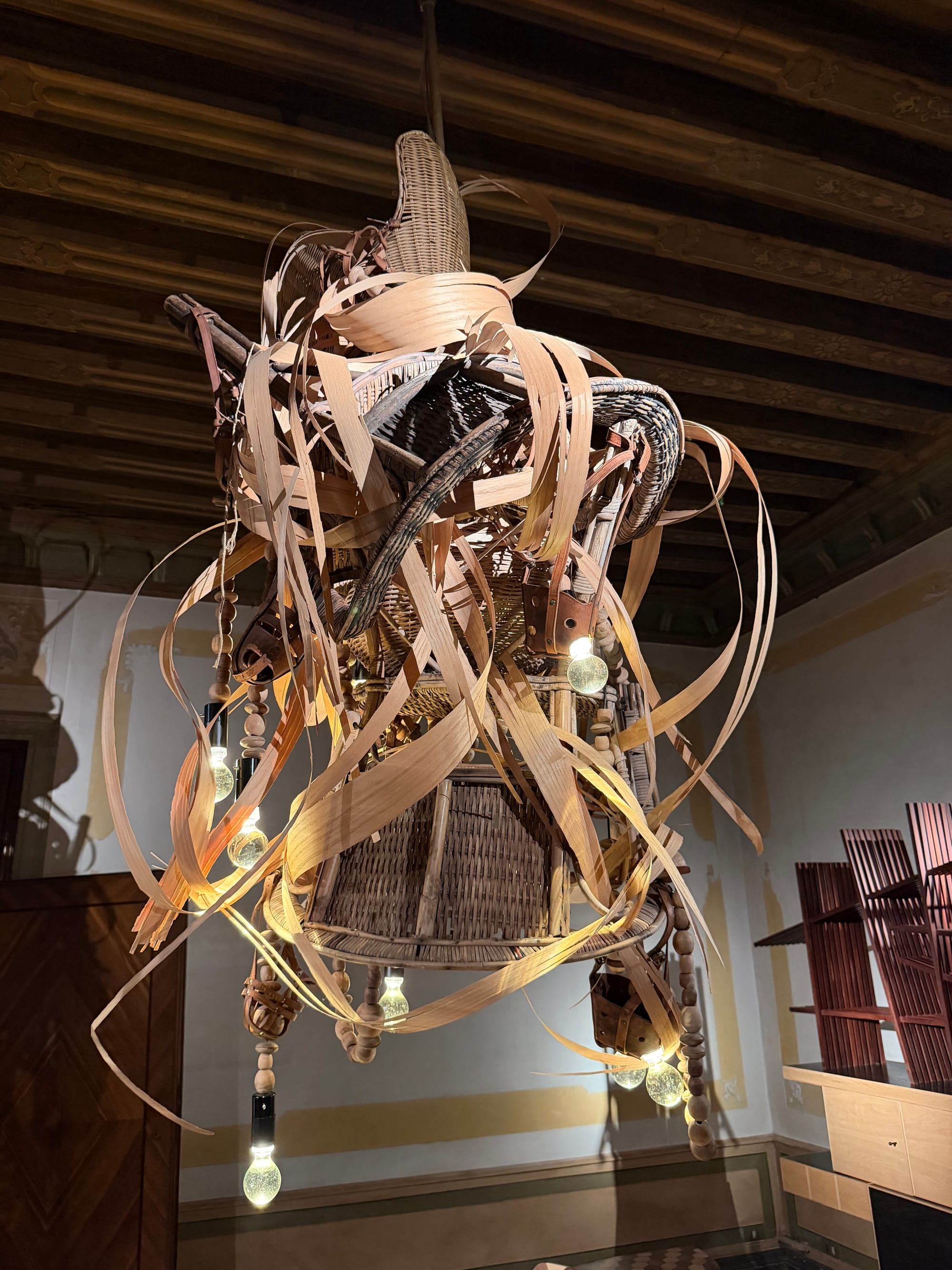
Further research into the exhibition reveals other works that deepen the logic of the show.
Peter Buggenhout’s large metal sculpture has been described by Van Noten as almost like a monster emerging from the Grand Canal — a proud being that dominates the entrance.
This image feels essential.
The monster is not outside beauty.
The monster is beauty when beauty refuses politeness.
Joseph Arzoumanov’s AI-assisted chess set introduces another tension: craft confronting machine logic. Reports describe the work as detailed, dark, and linked to nightmare, precious materials, robotics, and a machine-based world.
In the age of artificial intelligence, this matters. The exhibition is not anti-technology in a simplistic way. But it insists that the hand still has moral weight. That obsession, detail, and material labor still produce forms of intelligence that machines cannot fully replace.
Kaori Kurihara’s ceramics, also noted in coverage, bring fantasy and fragility into the exhibition’s ecosystem.
Together, these works complicate the title.
Beauty is not always floral.
Sometimes beauty is metallic.
Sometimes it is robotic.
Sometimes it is monstrous.
Sometimes it is ceramic and almost too delicate to survive.
Fashion Appears, But Does Not Dominate
Fashion is present, of course.
Reports mention works by Christian Lacroix, Comme des Garçons, and other fashion voices within the exhibition. Vogue describes the presentation as bringing together couture, sculptural garments, emerging designers, art, craft, and historical objects in a dialogue that collapses time and genre.
But what is striking is that fashion does not dominate the room. It behaves as one language among many.
This feels deeply aligned with Dries Van Noten’s own career. His work was never only about clothes as product. It was about atmosphere. About the intelligence of color. About memory in fabric. About flowers that were never merely flowers, but emotional weather.
At the foundation, fashion steps outside the runway and becomes part of a wider grammar of making.
A dress can speak to a chair.
A chair can speak to a sculpture.
A sculpture can speak to a chandelier.
A chandelier can speak to the canal.
This is not interdisciplinary as a trend.
It is interdisciplinary as necessity.
Ringo’s Reading: Beauty as Form, Liberty as Tension
For Ringo, the exhibition speaks directly to our ongoing theme: Form & Liberty.
Form appears everywhere: in tailoring, sculpture, furniture, ceramics, metal, textile, architecture, ornament. But liberty does not appear as freedom from form. It appears through form’s pressure.
A chair becomes a creature.
A garment becomes inheritance.
A discarded object becomes ceremony.
A face becomes psychological landscape.
A palazzo becomes a nervous system.
Liberty is not escape.
Liberty is transformation under constraint.
This is what Dries Van Noten seems to understand profoundly. His own work has always lived between discipline and abundance. Between control and bloom. Between structure and emotion. The foundation extends that language beyond fashion, allowing other makers to enter the same conversation.
The exhibition does not ask us to choose between beauty and seriousness.
It says:
Beauty can think.
Beauty can disturb.
Beauty can remember.
Beauty can protest.
Fondazione Dries Van Noten
The Only True Protest Is Beauty
Curated by Dries Van Noten and Geert Bruloot
25 April – 4 October 2026
Palazzo Pisani Moretta, Venice, Italy